From Fake Leads to Real Jobs: The Baron Construction's Website and Google Ads
The Baron Construction had no website and was paying for Meta leads that weren't real. In 37 hours we built the site, the listings and a Google Search campaign that now brings in real leads and real jobs.
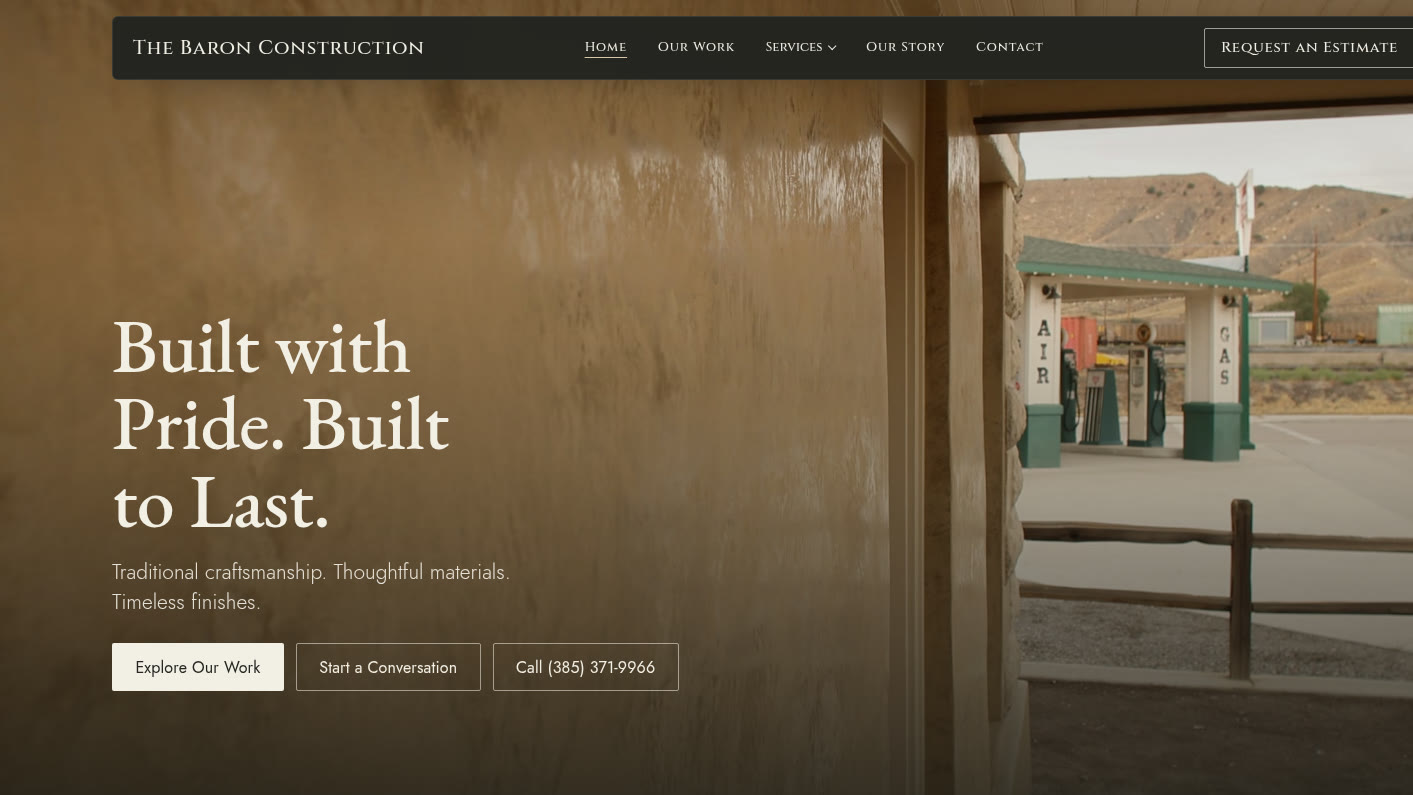
The Baron Construction is a Utah finishing company owned by Dakota Lebaron: Venetian plaster, limewash, interior and exterior painting, wood finishing, finish carpentry and drywall, across Salt Lake City, Park City and the Wasatch Back. The craftsmanship was already there. What was missing was everything that lets a stranger find that work, trust it and ask for a quote.
In under a month we went from no website and an ad budget producing junk to a live site, a working Google Search campaign, and real inquiries that are turning into real jobs. Here is what Dakota was up against, what we built, why we built it that way, and what it cost.
The challenges
1. No website. There was nowhere to send anyone. No portfolio, no service pages, no form, nothing for Google to index. Every ad and every referral ended at a phone number or an Instagram profile.
2. Ad money going to Meta leads that weren't real. Dakota was paying for Meta (Facebook and Instagram) lead ads. The leads came in, but they weren't real customers. Meta's in-app lead forms make submitting effortless, which is exactly the problem: one tap auto-fills a name and phone number, so the volume looks good and the intent is close to zero.
3. No way to tell what worked. There was no analytics and no conversion tracking. Without that there is no way to know which dollar produced a call and which produced nothing, so there is no way to fix the spend.
4. Invisible in local search. The business didn't show up consistently on Google, Apple Maps, Bing, Yelp, Houzz or the BBB. People who search "Venetian plaster Park City" before they ever see an ad had no way to land on The Baron.
5. A high-end service that is hard to sell in a sentence. Venetian plaster and limewash are luxury finishes. Most people don't know the difference, and many searches for those words come from DIYers, product shoppers and people looking up paint colors. The site and the ads both had to speak to homeowners and designers who are actually ready to hire.
What we did, and why
Week 1: a website built around the work
We started with marketing research and a style guide: colors, type, voice, and rules for how the business talks about itself (no "best", no "#1", no claims Dakota can't back up). That guide kept every page that followed consistent.
Then the site itself:
- Home, Our Work, Our Story, Contact and an FAQ, plus a page for each service: Venetian plaster, limewash, interior painting, exterior painting, wood finishing, carpentry and drywall.
- Dakota's own photos and words. Our Story is his text. The portfolio is his project photography, and 14 short videos of plaster being applied and burnished are served through Cloudflare Stream so they load quickly on a phone.
- A 60-question FAQ written answer-first, so Google and AI search tools can quote it directly when someone asks "what's the difference between limewash and Venetian plaster?"
- Inquiry forms that go straight to Dakota's inbox through Google Workspace, with photo uploads, so a homeowner can send pictures of the wall they want done.
- Spam protection with Cloudflare Turnstile, a honeypot and an origin check. After what happened with Meta, we wanted every inquiry that reaches Dakota to come from a real person.
- Domain, DNS and business email set up so mail from the site lands in the inbox and not in spam.
Why: every ad, listing and referral needs a destination that does the selling. A homeowner spending real money on plaster wants to see finished work, understand the process and know who they're hiring before they pick up the phone.
Week 2: getting found
- Google Search Console and Bing Webmaster Tools, with a sitemap submitted, so the site is indexed on Google, Bing, Yahoo and DuckDuckGo.
- Google Analytics 4 and Google tags on every page.
- Live Google reviews pulled onto the Contact page and the FAQ, so the business's existing five-star reputation shows up where people decide.
- Directory listings: updated the Google Business Profile, and added Bing Places, Apple Business Connect (with DNS verification), Yelp, Houzz and the BBB, all with the same name, phone number and service area. Consistent listings are one of the strongest signals for local search.
Why: paid ads stop the day the budget stops. Search visibility and listings keep sending people for free, and they make the ads work better, because the business looks established wherever a customer checks.
Weeks 2 and 3: a Google Search campaign that only pays for intent
We moved the ad focus to Google Search, because search ads reach people at the moment they are looking. Someone typing "Venetian plaster contractor Park City" already wants the service. That is the opposite of a social feed ad that interrupts someone scrolling.
- A campaign built around Venetian plaster in Park City and the Wasatch Back, with Salt Lake County included.
- Keyword research plus a long negative keyword list that blocks DIY, product, "free", "for sale", paint-color and wallpaper searches before they cost a cent.
- Conversion tracking that counts real actions: a submitted inquiry and a phone call from the site. Calls use Google's forwarding number, so a call from an ad counts even when the customer never fills out a form.
- A restructure once the first data came in. The first weeks showed impressions going to the wrong searches. We split the campaign into four tight ad groups (Venetian plaster, limewash and lime plaster, specialty plaster finishes, plaster fireplaces and accent walls), each sending people to the matching page, lowered the maximum cost per click, and added a "Call" button to the top of every landing page.
- Remarketing groundwork: website-visitor audiences on Google, and the Meta Pixel with proper events, so a future retargeting campaign shows ads only to people who have already visited the site instead of to strangers.
- Google Local Services Ads: researched pay-per-lead ads for the painting side of the business and applied.
Why: the goal was never more leads. It was more real leads. Every choice here filters for intent: search instead of feed, tight keywords, aggressive negatives, and tracking that only counts a form or a call.
Week 4: testing it like a customer would
We ran a simulated study of 100 visitors through the site to find where people hesitated, then made only the changes that fit the brand: Google reviews moved to the top of the FAQ, and clear "on request" wording for references and the certificate of insurance. We also confirmed the sitemap was registered in Search Console.
The result
- A complete website at thebaronconstruction.com: 18 pages, Dakota's own portfolio and video, forms that reach his inbox, and protection against junk submissions.
- Listed and consistent on Google, Apple, Bing, Yelp, Houzz and the BBB.
- A Google Search campaign that bids only on buyer searches and counts only forms and calls.
- Real leads, and real jobs. The inquiries coming in now are homeowners asking about specific projects, and they are turning into booked work.
The campaign is still new, but the early numbers point the right way. In its latest week (November 10 to 16, 2026):
- Daily impressions are up more than 2,800% compared with the 30 days before the restructure.
- 5.3% of people who saw an ad clicked it.
- 5.3% of clicks became a lead, up from 0% before the restructure.
- The Baron showed for 44% of eligible searches, up from 42% the week before, while the closest local competitor showed for 16%.
What it cost
We work by the hour, at $45 an hour. Everything above took 37 hours.
| Work | Hours | Cost at $45/hr |
|---|---|---|
| Website design and development: research, style guide, every page, forms, spam protection, DNS, email, video hosting | 17 | $765 |
| SEO and search setup: Search Console, Bing, analytics, tags, sitemap, reviews, indexing, visitor testing | 6 | $270 |
| Google Ads, directory listings and tracking: campaign build, keywords, conversions, Meta Pixel, remarketing, restructure, Local Services Ads | 13 | $585 |
| Marketing consulting: Meta campaign review | 1 | $45 |
| Total | 37 | $1,665 |
Ad spend is paid directly to Google by the business and isn't included above.
Why we work by the hour, not by bid
We don't quote a fixed price for projects like this, and The Baron is a good example of why.
Nobody knew at the start that the Google Ads conversion actions would need to be rebuilt, that the first keyword set would pull DIY traffic, or that the domain needed DNS work before inquiries and listings would verify. A fixed bid has to guess at all of that up front. Either the price is padded to cover the unknowns, or the work stops at whatever the bid covered, even when the last 20% is the part that makes it actually work.
Billing by the hour means:
- You pay for what was done, itemized by day, not for a guess.
- We can follow the data. When the first ad results showed the wrong searches, we fixed it that week, without a change order.
- The job is done when it works, not when a scope document says so. Here, done meant real leads in Dakota's inbox, not a website that merely exists.
For a small business, the difference between a site that is live and a site that produces work is usually a handful of hours of follow-through. We would rather bill those hours honestly than leave them out.
Need a website or ads that bring in real customers? Get in touch.